

Why Is a Competitor Ranking Higher on Google With Worse Reviews?
It's one of the more frustrating discoveries a dental practice owner can make: seeing a competitor ranking higher on Google even though they have a lower star rating and fewer reviews. You check Google expecting to see your practice near the top given your strong reputation, and instead a competitor is sitting above you. It feels backwards. If reviews are supposed to matter, how is a "worse" practice winning the ranking battle?
The reality is that reviews are only one part of Google's local ranking system.
Why can a competitor with worse reviews rank higher on Google? Because Google doesn't rank dental practices based on reviews alone. Local rankings are influenced by relevance, distance, and prominence. A competitor may have fewer or lower-rated reviews but stronger website authority, better local SEO, more relevant content, stronger backlinks, or a location that better matches the person performing the search.
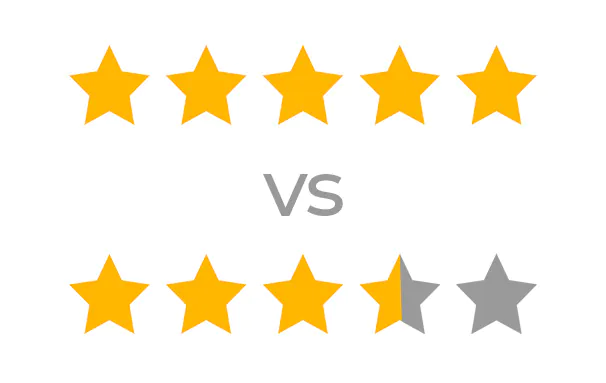
Key Takeaway: A dental practice with worse Google reviews can still outrank you because reviews are only one part of local search. Google primarily evaluates relevance, distance, and prominence, which can include website authority, backlinks, business information, reviews, and how closely a practice matches a search.
Why Better Google Reviews Don't Always Mean Higher Rankings
Google's local search algorithm evaluates practices across three broad categories: relevance, distance, and prominence. Reviews fall under prominence, but prominence also includes things like the number and quality of backlinks pointing to a dental website, how often a business is mentioned or cited across the web, and how established and authoritative the domain appears overall. A competitor with fewer or lower rated reviews can still out-rank you if their prominence signals are stronger in these other areas.
Relevance is a separate factor entirely, and it's one that's frequently overlooked. This measures how well a business listing and website match the specific words someone typed into the search bar. If a competitor's Google Business Profile and website are more thoroughly optimized around the exact services and locations people are searching for, that relevance advantage can outweigh a review disadvantage.
Distance matters too. If a competitor's office happens to sit closer to the center of the searches Google is evaluating, or closer to the specific person doing the searching, that alone can push them above a practice with better reviews but a slightly less convenient location relative to that search.
5 Reasons for a Competitor Ranking Higher on Google
- Their website is stronger from a technical and content standpoint. Page speed, mobile usability, secure connections, clear site structure, and content that's genuinely relevant to local searches all factor into ranking. Creating content that directly answers the questions prospective patients are asking can also improve visibility beyond traditional Google search. As more patients use AI-powered platforms to research dentists and treatment options, having clear, authoritative content can help your practice appear in both search results and emerging AI search experiences. A slow, outdated, or thin dental website can hold back a practice with excellent reviews, while a competitor with a faster, better structured site gains ground even with a lower star rating.
- They have more, or stronger, backlinks. Backlinks, meaning other reputable websites linking back to theirs, remain one of the strongest prominence signals Google uses. A competitor who has been featured in local press, listed in dental directories, or linked from community organizations may be building authority you aren't even aware exists.

- Their Google Business Profile may be more complete and better optimized. A complete and accurate Google Business Profile helps Google understand what a practice offers and match it with relevant searches. Keeping services, categories, hours, photos, and business information accurate can also create a stronger experience for prospective patients.
- Their review activity may be more consistent than yours. A steady flow of genuine reviews can strengthen the overall reputation signals around a practice and give prospective patients more current feedback to consider. While Google does not disclose exactly how individual review signals are weighted, review count and positive ratings are confirmed factors in local visibility.
- They're simply more relevant to the specific keyword being searched. If someone searches "emergency dentist" and a competitor's site and profile are built specifically around emergency dental care, while your practice's content is more general, that keyword-level relevance can outweigh your dental reputation advantage for that particular search, even if you'd win head to head on a broader "best dentist" search.
Why This Isn't Something Reviews Alone Can Fix
It's tempting to respond to this situation by pushing hard for more reviews, and while that's rarely a bad idea, it usually isn't the actual fix if the core problem is relevance, website quality, or backlink authority. Adding 50 more five star reviews won't move the needle much if your website is still slow, your Google Business Profile is thin, and your competitor still has stronger backlinks and more targeted content.
This is exactly why a full audit matters more than guessing. Comparing your practice against the specific competitors currently outranking you, factor by factor, reveals where the real gap is. Sometimes it genuinely is reviews. More often, it's a combination of technical dental SEO issues, content gaps, and authority signals that have been building in the background for years.
How Dentists Can Improve Their Google Rankings
Closing this kind of gap typically involves:
- A full technical and content audit of your website compared directly against the competitors currently outranking you
- Local keyword optimization so your content and Google Business Profile are speaking directly to the exact searches your ideal patients are using
- A backlink and citation strategy to build the same kind of authority signals your competitor may already have
- Consistent Google Business Profile activity, including regular posts, photo updates, and prompt responses to every review
- An ongoing review generation process that keeps your reviews recent, not just plentiful
This is the kind of work dental SEO is built to handle as a coordinated strategy, rather than a single fix. Outranking a specific competitor almost always requires closing several gaps at once, not just the one that's easiest to spot.

The Bottom Line
A competitor with worse reviews outranking you isn't a sign that reviews don't matter. It's a sign that they're likely winning somewhere else, whether that's relevance, backlinks, website quality, or profile activity, by enough to offset their weaker reputation. The fix isn't more reviews in isolation. It's understanding exactly where the gap is and closing it systematically.
Book a Free Practice Growth Call to get a real comparison against the competitors currently outranking you, and a clear picture of what it will take to move ahead of them.