

How to Make Your Dental Practice Show Up in ChatGPT
ChatGPT optimization for dentists is becoming an important part of being discovered online. Patients can now ask AI assistants questions like “Which dentist near me offers same-day emergency appointments?” or “Find a family dentist with good reviews in my area” and receive direct answers that may include specific dental practices.
That creates another opportunity for patients to discover your practice beyond a traditional Google search.
But simply having a website does not mean your practice will appear in those answers. Your website needs clear, useful information that AI search tools can access and understand.
So, what actually helps a dental practice show up in ChatGPT? Here are the factors that matter and the steps you can start taking now.
Why Some Dental Practices Show Up in ChatGPT
ChatGPT does not work exactly like a traditional Google search results page. When ChatGPT uses web search, it can pull information from publicly available sources and cite websites that are relevant to the question being asked.
That means your dental practice needs more than a dental website that simply exists. Your information needs to be accessible, specific, accurate, and easy to understand.
A website filled with general statements like “We provide high-quality dental care” gives an AI search tool very little useful information about when or why it should reference that practice.
A website that clearly explains services, locations, insurance information, emergency availability, treatment options, costs, frequently asked questions, and other patient concerns provides much more useful information.
The goal of ChatGPT optimization for dentists is not to manipulate an AI algorithm. It is to make your practice easier for both patients and AI search systems to understand.
The Core Factors That Influence AI Visibility
- Content specificity. Generic pages like "Welcome to our dental practice" or "We provide quality care for the whole family" don't answer any particular question a patient might ask. Content that directly addresses specific concerns (cost, insurance, sedation options, emergency availability, treatment specifics) gives AI models something concrete and citable.
- Structured, extractable information. AI tools tend to favor content that's organized clearly, with direct answers near the top, clear headers, and plainly stated facts rather than long marketing paragraphs that bury the actual answer. If a person or a machine has to dig to find your hours, pricing range, or services, that's friction working against you.
- Consistency across platforms. AI models cross-reference multiple sources when forming an answer. If your business hours, address, phone number, or services differ between your website, Google Business Profile, and other directories, it creates uncertainty that makes the model less likely to confidently recommend you.

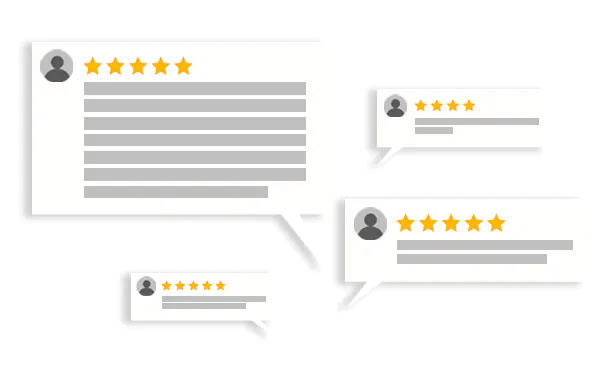
- Review signals. Reviews still matter here, not just for star rating but for what they say. Reviews that mention specific details (how a team handled anxiety, how quickly an emergency appointment was available, how a billing question was resolved) give AI models real, specific patient experiences to reference, not just a number.
- Topical authority built over time. A practice that has published a genuine body of specific, useful content addressing real patient questions builds up a kind of authority that both traditional search engines and AI models recognize. A single optimized page rarely competes with a practice that has consistently answered dozens of specific questions over time.
What This Looks Like in Practice
Imagine two practices. The first has a generic homepage, a short "About Us" page, and a services list with no further detail. The second has specific pages answering "how much does a root canal cost without insurance," "what sedation options are available for anxious patients," and "do you accept walk-in emergency appointments." When someone asks ChatGPT a related question, the second practice has real, directly relevant content the model can pull from and reference. The first practice simply isn't part of the conversation, because it never answered anything specific enough to be useful.
This is exactly the pattern behind AI visibility. It rewards practices that behave like they're actually trying to help a specific person with a specific concern, rather than practices that are just present online in a general sense.
Steps You Can Start Taking Now
- Audit your existing content for specificity. Look at your site through the lens of "what exact question does this page answer?" If the honest answer is "none in particular," that page is unlikely to ever be pulled into an AI response.
- Fill the gaps with direct, question-based content. Build out pages and posts that answer the real questions your patients ask before booking, using clear language and direct answers near the top of the page.
- Get your business information airtight and consistent. Check your website, Google Business Profile, and every directory listing for matching hours, services, address, and phone number.
- Keep your review flow active and detailed. Encourage reviews that mention specifics, not just a star rating, and respond to every one so the ongoing activity is visible.
- Think in terms of ongoing authority, not a single fix. AI visibility tends to build the same way traditional SEO authority does, through consistent, specific, genuinely useful content published over time rather than a one time optimization pass.
Where to Go Deeper
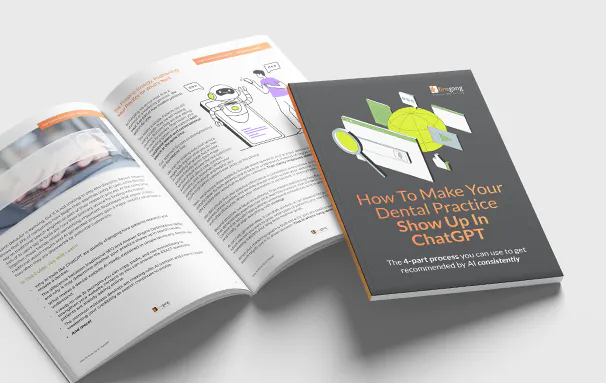
This is a fast moving area, and the specifics of how AI platforms evaluate and cite content continue to shift as the technology matures. We put together a complete breakdown of exactly how this works and what dental practices can do to improve their visibility across ChatGPT and other AI assistants.
Download the free ChatGPT Visibility Guide for Dentists for a full walkthrough of the strategy, including specific content structures, technical checklist items, and real examples of what AI-friendly dental content looks like in practice.
The Bottom Line
Showing up in ChatGPT isn't about gaming a new algorithm. It's about publishing genuinely specific, well-organized, consistent information that both patients and AI models find useful. The practices building that kind of presence now are giving AI search tools more accurate, useful information to work with as patients increasingly explore new ways to find dental care.
Book a Free Practice Growth Call with the best dental marketing company to find out where your practice currently stands in AI search visibility, and what it would take to start showing up in these conversations.